Scaling Up Without a License Gap: The Operator's Guide to Layering Alcohol Permits as Your Business Grows
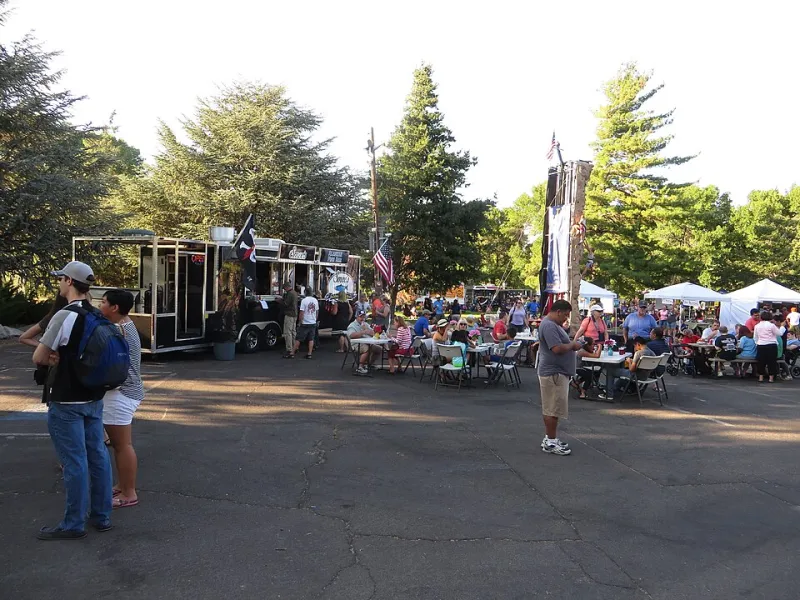
Photo: Ken Lund, CC BY-SA 2.0, via Wikimedia Commons
Every hospitality success story follows a familiar arc: a food truck builds a following, the truck becomes a brick-and-mortar café, the café adds a beer list, and eventually the owner is sketching out a full bar. What the arc leaves out is the licensing sequence running silently underneath it. Each stage of expansion changes what you are legally allowed to serve, and a single misstep in timing can leave you with staff, inventory, and customers — but no lawful authority to pour.
Map Your Model to Your Permit Category
The first discipline is matching your actual operations to the correct license classification. Most state frameworks distinguish among:
- Limited or ancillary permits — beer and wine only, often tied to food service
- Full on-premises licenses — spirits, wine, and beer for consumption on site
- Catering and off-site extensions — authority to serve at events away from your licensed premises
- Mobile or transient vendor permits — authority tied to a vehicle or temporary location rather than a fixed address
The critical point is that these are not interchangeable. A beer-and-wine restaurant license does not authorize a spirits program, a mobile vendor permit does not authorize service from a permanent kitchen, and neither authorizes catering at an off-site wedding. Expansion almost always means a new application, not an amendment.
The Timing Trap: Applying Too Late and Too Early
The most common — and most expensive — error is sequencing applications against your build-out calendar. A full liquor license application in many states takes sixty to one hundred twenty days, longer if the locality requires a zoning determination, a public hearing, or a background investigation of every investor holding more than a small ownership stake. Operators who sign a lease, begin construction, and then apply routinely open weeks or months late, paying rent and payroll on a dining room that cannot legally serve alcohol.
The opposite error is applying too early. Licenses often carry conditions — a premises diagram, an approved floor plan, specific hours of operation — and if your concept evolves during permitting, you may need to amend or restart the application. The practical rule: file when your floor plan, ownership structure, and business model are locked, not when they are aspirational.
Watch the Ownership Continuity Requirement
Growth frequently brings new investors, and here operators stumble in a subtler way. Most states require disclosure of any person with a financial interest in the license, and material changes in ownership during a pending application — or after issuance — must be reported, sometimes within days. An operator who adds a partner to fund the expansion and treats the paperwork as a formality risks fines, license suspension, or a voided application. Build a disclosure checklist into every financing conversation.
Bridging the Gap Between Stages
Because full licenses take time, sophisticated operators use transitional tools:
- Interim service models. Until the full license issues, a beer-and-wine program can keep revenue flowing and demonstrate compliance history.
- Catering endorsements. Adding an off-site catering authorization early creates flexibility for events while the primary expansion is pending.
- Premises extensions. Where permitted, a licensed patio or adjacent space can be added by amendment rather than a fresh application — a far faster route, if your authority allows it.
Keep a Clean Record, Because It Follows You
Every subsequent application builds on the last. Violations, late renewals, or undisclosed ownership changes from your food truck days will surface in the background review for your full liquor license. Treat each permit, however small, as part of a permanent regulatory résumé — because that is exactly how the licensing authority will treat it.
The Takeaway
Scaling a hospitality business is a licensing project as much as a construction or financing project. Sequence your applications against your real timeline, disclose ownership changes promptly, use transitional permits to bridge gaps, and never assume yesterday's authorization covers tomorrow's menu. Operators who plan the license ladder as deliberately as the business plan open on schedule — and pour legally from day one.