Beyond the Application Fee: Understanding the True Financial Toll of Liquor License Delays

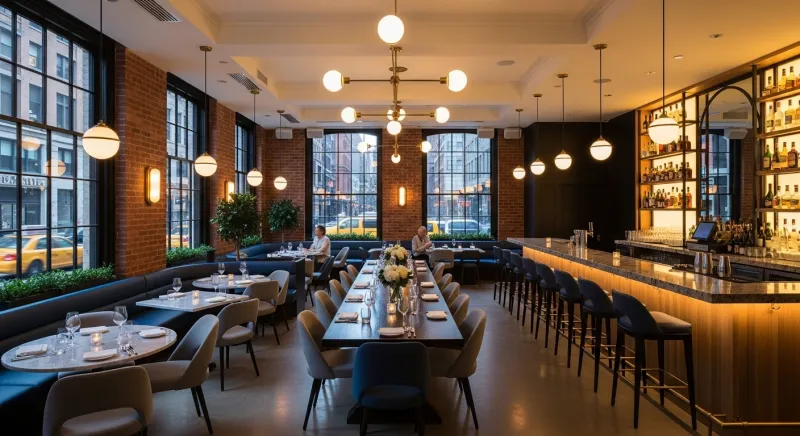
Photo: Wonderlane from Seattle, USA, CC BY 2.0, via Wikimedia Commons
For many bar owners, restaurateurs, and retail operators, the liquor license application fee is the number that dominates early budget conversations. In California, a Type 47 on-sale general license can cost several thousand dollars in filing fees alone. In New York, an on-premises liquor license carries its own schedule of charges. These figures are real and significant — but they represent only the most visible layer of licensing costs.
The far greater financial risk lies in what happens during the waiting period. Across the United States, liquor license processing timelines vary dramatically by state, county, and license type. While some jurisdictions approve applications within 30 to 60 days, others — particularly those requiring public comment periods, background investigations, or local government hearings — can stretch that window to six months or longer. Every week spent waiting is a week in which operating costs accumulate without the revenue that alcohol sales generate.
Understanding the full scope of these costs is not merely an academic exercise. It is a foundational element of responsible financial planning for any licensed premises.
The Revenue Gap: What Delayed Licensing Actually Costs Per Week
Alcohol sales typically represent between 20 and 40 percent of total revenue for a full-service restaurant, and considerably more for bars and nightclubs. For a mid-volume establishment projecting $15,000 in weekly beverage sales, a two-month delay translates to roughly $120,000 in deferred revenue — money that cannot be recovered once the window has passed.
Some operators choose to open in a limited capacity without their license, serving food-only to generate some cash flow. While this approach can partially offset losses, it rarely covers fixed operating costs, and it introduces its own risks if the premises begins attracting staff, customers, and attention before the license is secured. A soft-open strategy requires careful legal review to ensure it does not inadvertently trigger compliance concerns.
Operators should model their projected weekly alcohol revenue during the planning phase and multiply that figure by the realistic — not optimistic — processing timeline for their specific jurisdiction. That number should be treated as a contingency reserve requirement, not an optional buffer.
Staffing Costs During the Waiting Period
Hiring timelines rarely align neatly with licensing timelines. Operators often begin recruiting and onboarding staff weeks before opening, particularly for positions requiring training, certification, or specialized experience. Bartenders, floor managers, and supervisory staff may be on payroll before the first license approval arrives.
In states where Responsible Beverage Service (RBS) training is mandatory — California's AB 1221 is a prominent example — staff must complete certification before they can legally serve alcohol. Operators who invest in that training before their license is issued may find themselves paying for re-certification if staff turnover occurs during an extended delay. These costs are small individually but compound quickly across a full team.
A prudent approach is to stagger hiring timelines based on a conservative estimate of the approval date, retaining only essential pre-opening staff until the license is materially close to issuance. This requires honest communication with prospective employees, but it can significantly reduce payroll burn during idle periods.
Inventory Management and Perishability Risks
Beverage inventory presents a unique challenge during licensing delays. Unlike dry goods or equipment, certain products — particularly craft beers, fresh-pressed juices intended for cocktails, and wines stored at suboptimal temperatures — have finite shelf lives. Operators who pre-purchase inventory in anticipation of a specific opening date may face spoilage losses if that date slips.
Beyond perishability, there is the matter of capital tied up in stock that cannot yet be legally sold. In states with strict tied-house laws or three-tier system regulations, the timing of inventory acquisition relative to license issuance can also carry compliance implications. Operators should consult with a licensing attorney or compliance specialist before making substantial pre-license inventory purchases.
The more conservative strategy is to establish supplier relationships and negotiate delivery timelines without placing binding orders until the license is in hand — or at minimum, until the application has cleared its most substantial procedural hurdles.
Lease Obligations and Fixed Overhead During Delays
For most operators, the commercial lease begins running from a fixed date regardless of licensing status. A space that costs $8,000 per month in rent and common area maintenance fees generates $96,000 in annual overhead — whether or not the business is generating revenue. A three-month delay adds $24,000 in unproductive occupancy costs to the balance sheet.
Negotiating a rent abatement period tied to licensing milestones is a legitimate and increasingly common practice in commercial leases for food and beverage tenants. Landlords familiar with the hospitality sector often understand the licensing timeline challenge. Operators should approach lease negotiations with a realistic picture of their jurisdiction's processing window and request abatement or reduced rent during the pre-license period accordingly.
State-by-State Timeline Variability and Its Budgetary Implications
One of the most important variables in financial planning is the jurisdiction itself. Processing timelines are not uniform across the country, and they can shift based on application volume, staffing at the relevant licensing authority, and the complexity of the application type.
In Texas, the Texas Alcoholic Beverage Commission (TABC) processes many applications within 45 to 60 days, though applications requiring local certification or additional investigation may take longer. In Illinois, the city of Chicago maintains its own licensing process separate from the state, and combined timelines can exceed 90 days. Florida's Division of Alcoholic Beverages and Tobacco publishes processing time estimates, but these fluctuate seasonally.
Operators expanding into multiple states should build jurisdiction-specific timeline assumptions into their pro forma financial models rather than applying a single national average. A multi-location rollout that underestimates processing time in even one state can create cash flow disruptions that affect the entire portfolio.
Building a Delay-Resilient Financial Plan
The most effective mitigation strategy is also the most straightforward: plan for the worst-case timeline, not the best-case one. Specifically, operators should:
- Establish a dedicated licensing contingency fund equal to at least two to three months of projected fixed operating costs, held in reserve and not deployed for fit-out or inventory.
- Sequence capital expenditures so that high-cost, low-urgency items — such as full bar build-outs and premium spirits inventory — are deferred until the license application has advanced past the public comment or investigation phase.
- Engage a licensing specialist early in the process, ideally before signing a lease. An experienced professional can identify jurisdiction-specific requirements that commonly cause delays and help structure the application to minimize exposure.
- Track application status proactively and maintain regular communication with the licensing authority. In many states, incomplete applications or requests for additional documentation are the primary cause of extended timelines — and these issues can often be addressed quickly if the operator is actively monitoring the process.
Liquor license delays are, to a meaningful degree, a manageable risk. They cannot always be eliminated, but with accurate financial modeling, disciplined capital management, and professional guidance, their impact can be substantially reduced.
The application fee is the cost of entry. The real investment is in planning for everything that follows.