Before You Sign the Lease: Building a Denial-Proof Contingency Plan for Your Liquor License Application

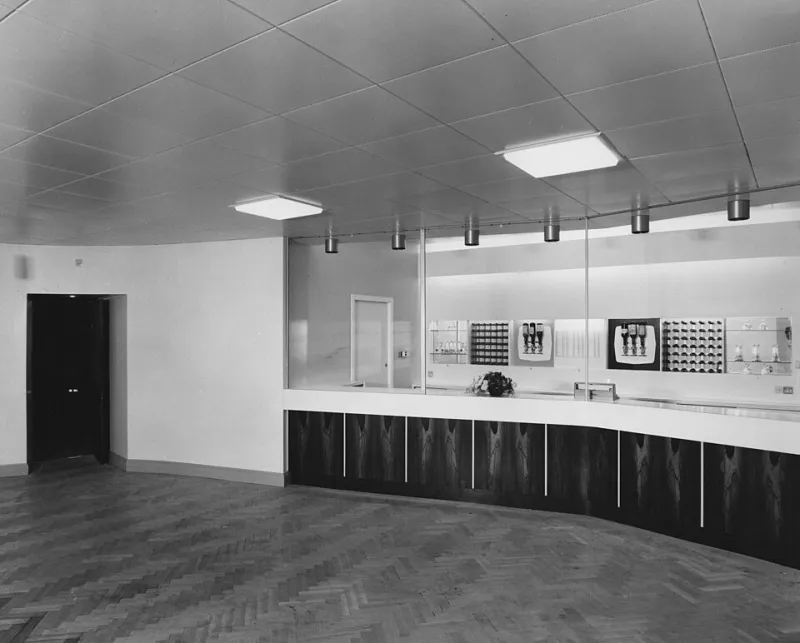
Photo: USAID Africa Bureau, Public domain, via Wikimedia Commons
There is a particular kind of optimism that pervades the early stages of opening a bar, restaurant, or retail liquor establishment. Entrepreneurs visualize the finished space, negotiate supplier agreements, and sign commercial leases—often before a liquor license application has been filed, let alone approved. That optimism, left unchecked by practical contingency planning, has quietly undone a remarkable number of otherwise viable businesses.
A liquor license denial is not a rare occurrence. State and local regulatory bodies reject applications for reasons ranging from zoning incompatibilities and proximity restrictions to unresolved criminal history disclosures and incomplete documentation. In competitive markets such as New York City, Los Angeles, and Chicago, community board opposition alone has derailed applications that met every technical requirement. Yet most prospective licensees treat denial as an abstract possibility rather than a concrete risk requiring structured mitigation.
The operators who navigate this landscape most successfully are those who build protective frameworks into their business structures before submitting a single page to a licensing authority.
Why Contingency Planning Is Routinely Neglected
The oversight is partly psychological. Entrepreneurs who have already invested months of planning, significant capital, and considerable emotional energy into a concept are understandably reluctant to architect an exit strategy before the venture has begun. There is also a practical dimension: attorneys, consultants, and brokers who are compensated upon deal closure have limited financial incentive to emphasize worst-case scenarios.
The result is that many applicants enter the licensing process without any formal mechanism to protect themselves if the application fails. They have signed unconditional leases, drawn down financing, committed to equipment purchases, and hired staff—all before regulatory approval has been secured. When a denial arrives, the financial exposure is immediate and often catastrophic.
The Lease Contingency: Your First and Most Critical Protection
Commercial lease negotiations represent the single most important opportunity to build denial protection into a new venture. A properly drafted liquor license contingency clause makes the lease—or at minimum, the obligation to begin paying rent—conditional upon the successful issuance of a liquor license within a defined timeframe.
The specifics matter considerably. A vague contingency that references only "obtaining necessary permits" may not be interpreted by a court to encompass a liquor license specifically. Operators should work with legal counsel to ensure the clause explicitly names the license type required, identifies the issuing authority, and establishes a clear deadline—typically 90 to 180 days from lease execution, depending on the jurisdiction's average processing timeline.
Landlords in high-demand markets frequently resist such clauses, and some will refuse them outright. In those circumstances, operators may negotiate alternative protections: a reduced rent period during the application phase, a personal guarantee limitation tied to license approval, or a right of first refusal on the space should the application fail and the operator elect to vacate. None of these alternatives is as clean as a true contingency clause, but each provides measurable protection compared to an unconditional commitment.
Structuring Financing to Absorb a Denial
Capital structure is the second area where inadequate planning creates outsized vulnerability. Operators who finance a build-out entirely through personal savings or high-interest bridge loans—with the expectation that revenue will begin flowing immediately upon opening—have almost no capacity to absorb an application delay or denial.
A more defensible approach separates pre-approval expenditures from post-approval expenditures. Costs that are genuinely irreversible before licensing—such as architectural drawings, legal fees, and initial permitting costs—are unavoidable. However, major capital commitments such as bar equipment purchases, custom millwork, and extensive renovation work can often be staged to follow, rather than precede, license approval.
Where financing is involved, operators should discuss denial scenarios explicitly with their lenders. Some SBA-backed loan structures include provisions for delayed draw periods that can accommodate licensing timelines. Private lenders may be willing to negotiate milestone-based disbursement schedules tied to regulatory approvals. These conversations are far more productive before a loan closes than after a denial has been issued.
Timeline Buffers and Operational Sequencing
One of the most consistent errors in new venue planning is the assumption that a liquor license will be issued on a predictable schedule. Processing times vary dramatically across jurisdictions—from as few as 30 days in some rural counties to well over a year in municipalities with active community review processes or administrative backlogs. California's Alcoholic Beverage Control, for instance, publishes average processing timelines that routinely exceed 90 days for standard applications and can stretch considerably longer for premises with prior license history or contested hearings.
Operators who build their financial projections around a specific opening date—without accounting for regulatory delay—are effectively betting their solvency on a timeline they cannot control. A more prudent approach incorporates a buffer period of at least 60 to 90 days beyond the jurisdiction's published average into all financial modeling, lease commencement negotiations, and staff hiring schedules.
For multi-concept operators or those with existing revenue streams, this sequencing is more manageable. For first-time operators with no operating cash flow, the buffer period must be capitalized in advance.
Legal Recourse and the Appeal Process
A denial is not always a final outcome. Most state licensing authorities provide a formal appeals process, and in some cases, an initial denial can be overturned upon the submission of additional documentation, a modification of the proposed premises, or a successful administrative hearing. Operators who are unprepared for a denial often fail to pursue these avenues simply because they lack the financial runway to sustain operations—or pre-opening obligations—during the appeal period.
Building a modest legal reserve into the initial capitalization plan specifically for the purpose of funding an appeal is a straightforward but frequently overlooked safeguard. The cost of an administrative appeal is almost always lower than the cost of walking away from a signed lease, completed build-out, and committed payroll.
Operators should also understand the grounds on which denials are issued in their target jurisdiction before submitting an application. Some denial grounds—such as proximity to a school or place of worship—are essentially non-appealable. Others, such as documentation deficiencies or unresolved background check questions, are entirely curable. Knowing the difference shapes both the application strategy and the contingency framework.
Scenario Planning as a Standard Practice
The operators who fare best through licensing uncertainty are those who have explicitly modeled denial scenarios before committing capital. This does not require elaborate financial modeling—it requires honest answers to a small set of direct questions: If the application is denied, what are my total committed obligations? Which of those obligations can be terminated or deferred? How long can the business sustain itself without revenue while pursuing an appeal? What is the maximum financial loss I can absorb before the venture becomes unrecoverable?
These questions are uncomfortable precisely because they force a confrontation with risk that enthusiasm tends to suppress. But they are the questions that regulators, experienced lenders, and seasoned operators ask as a matter of routine.
A liquor license application is a regulatory proceeding with an uncertain outcome—not a formality standing between an entrepreneur and an inevitable approval. Treating it as such, and building the protective structures that uncertainty demands, is not pessimism. It is the foundation of a business that can survive the unexpected and remain viable long enough to succeed.