When Green Meets Gold: How Cannabis Legalization Is Creating Unexpected Compliance Traps for Liquor License Holders
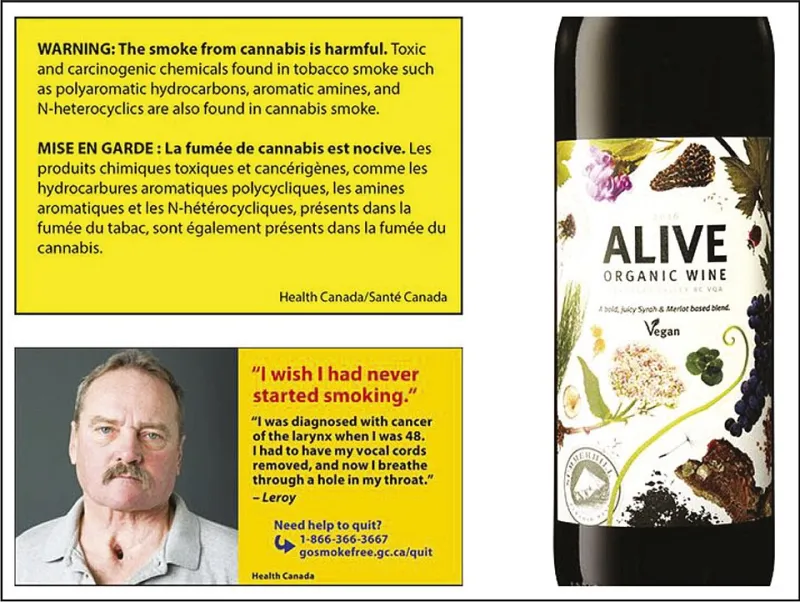
Photo: (March 2020). "Cancer Warning Labels on Alcohol Containers: A Consumer’s Right to Know, a Government’s Responsibility to Inform, and an Industry’s Power to Thwart". Journal of Studies on Alcohol and Drugs 81 (2): 284–292. DOI:10.15288/jsad.2020.81.
For much of the past century, the regulatory universe governing alcohol sales operated largely in isolation. Liquor control boards set their own rules, inspectors focused on alcohol-specific conduct, and the compliance obligations facing a bar or restaurant owner were, at minimum, predictable in scope. That isolation is eroding rapidly.
As more than 40 states have enacted some form of cannabis legalization — whether medical, recreational, or both — a new and underappreciated compliance frontier has emerged. Liquor license holders who assumed cannabis legislation was someone else's regulatory concern are increasingly discovering otherwise. In state after state, cannabis legalization frameworks have introduced provisions that directly constrain what a licensed alcohol retailer can do, where they can operate, and who they can associate with commercially. The consequences of ignoring these provisions can be severe: license suspension, denial of renewal, or outright revocation.
This is not a theoretical risk. It is an active compliance challenge that operators must address with the same rigor they apply to age verification, hours of operation, and server training.
The Regulatory Collision No One Warned You About
When state legislatures draft cannabis legalization statutes, their primary focus is typically on the structure of the marijuana industry itself — licensing tiers, cultivation limits, retail frameworks, and tax obligations. Alcohol regulation is seldom the drafting committee's first concern. Yet the intersection of the two industries creates regulatory friction that falls directly on liquor license holders.
This friction manifests in several distinct forms.
Proximity restrictions are among the most immediate concerns. Several states that have legalized recreational cannabis have enacted rules prohibiting cannabis retail establishments from operating within a specified distance of licensed alcohol retailers — and vice versa. In some jurisdictions, the restriction runs in both directions, meaning a liquor licensee who opens a new location near an existing cannabis dispensary may trigger a compliance problem even if the cannabis operation preceded their own.
Co-location prohibitions present a related but distinct challenge. A growing number of states explicitly prohibit the simultaneous sale of alcohol and cannabis on the same licensed premises. This matters acutely for operators exploring cannabis lounges, consumption spaces, or delivery integration. An operator who holds a liquor license and attempts to introduce cannabis sales — even in a state where cannabis is fully legal — may find that their alcohol permit is immediately at risk. The two licenses, in many jurisdictions, simply cannot coexist on the same footprint.
Cross-promotion bans represent a quieter but equally consequential trap. Some state alcohol control agencies have issued guidance or formal rules prohibiting liquor licensees from advertising, promoting, or bundling their services in conjunction with cannabis products or cannabis retailers. This includes social media promotions, loyalty program tie-ins, and even physical signage that references cannabis-friendly environments. Operators who have casually positioned their establishments as cannabis-welcoming — without consulting their licensing counsel — may have already created a record that regulators can use against them.
A State-by-State Landscape in Flux
Because cannabis legalization has proceeded state by state rather than through federal action, the specific rules governing the alcohol-cannabis intersection vary considerably across jurisdictions. Operators should not assume that a framework applicable in one state will transfer cleanly to another.
In California, the Department of Alcoholic Beverage Control has explicitly stated that licensed premises may not permit the consumption of cannabis on the licensed premises, regardless of whether the activity is otherwise lawful under state cannabis law. The ABC has pursued enforcement actions against licensees who permitted cannabis consumption at events held on licensed property.
In Colorado, the Marijuana Enforcement Division and the Liquor Enforcement Division operate as separate agencies, but the state has maintained clear guidance prohibiting the co-location of alcohol and cannabis retail sales. Operators holding both types of licenses have been required to maintain physically distinct premises with separate entrances.
In Michigan and Illinois, operators have encountered proximity-based complications during license applications, with regulators scrutinizing the geographic relationship between proposed alcohol retail locations and existing cannabis dispensaries.
In New York, as the state's cannabis framework continues to mature, the Office of Cannabis Management has signaled that cross-industry promotional activity will be subject to scrutiny, and liquor licensees have been advised to seek guidance before entering into any commercial relationship with cannabis retailers.
The common thread across these jurisdictions is that the rules are evolving, enforcement postures are tightening, and the window for operators to self-correct — before a regulator identifies the problem — is narrowing.
Auditing Your Current Setup Before Regulators Do
For liquor license holders, the appropriate response to this landscape is not alarm but structured self-assessment. The following audit framework provides a starting point.
Review your lease and premises footprint. Determine whether any portion of your licensed premises is being used, or could be construed as being used, in connection with cannabis activity. This includes shared common areas, adjacent retail spaces under the same ownership, and outdoor areas subject to your license.
Map your proximity to cannabis retailers. Using your state's cannabis licensing database — most are publicly accessible — identify any licensed cannabis dispensaries within a defined radius of your premises. Cross-reference that radius against your state's applicable proximity restrictions. If a dispensary has recently opened nearby, verify whether your current license status or pending renewal could be affected.
Audit your marketing and promotional materials. Review your social media accounts, website, email marketing, and physical signage for any language or imagery that references cannabis, cannabis consumption, or cannabis-friendly environments. Remove or modify content that could create a compliance record.
Review vendor and commercial relationships. Assess whether any of your current suppliers, delivery partners, or promotional collaborators have cannabis industry affiliations. Cross-promotion prohibitions in some states extend to indirect commercial associations.
Consult your state's alcohol control agency guidance. Many state liquor control agencies have published specific guidance addressing the alcohol-cannabis intersection. Review this guidance carefully and note whether it has been updated in the past 12 months. Regulatory postures in this area are shifting quickly.
The Dual-License Question
Some operators are actively exploring whether they can hold both an alcohol license and a cannabis retail license — either personally or through affiliated entities. The answer varies significantly by state and, in some cases, by license type within a given state. Several jurisdictions permit dual licensure under strict structural conditions, including physical separation of premises and distinct ownership entities. Others prohibit it categorically.
Operators considering this path should engage licensing counsel before taking any steps toward a cannabis license application. The act of applying — even unsuccessfully — may create a disclosure obligation in a subsequent liquor license renewal that, if mishandled, produces its own compliance exposure.
Protecting What You Have Built
Liquor licenses represent significant financial and operational investment. The application process is demanding, the regulatory obligations are ongoing, and the consequences of revocation extend well beyond the loss of the permit itself. In an environment where cannabis legalization is creating new and often poorly publicized compliance obligations for alcohol retailers, the operators best positioned to protect their licenses are those who treat this intersection as a live compliance issue — not a future concern.
The regulatory landscape will continue to shift as more states refine their cannabis frameworks and as federal policy evolves. What will not change is the fundamental principle that compliance requires awareness. Operators who audit their current setup now, engage qualified counsel on dual-industry questions, and monitor state-level guidance as it develops will be far better positioned than those who discover the problem only when a regulator raises it first.